
Views: 0 Author: Site Editor Publish Time: 2026-03-18 Origin: Site


Ever tried cutting a glass bottle cleanly? Many fail on first attempt.A glass bottle can become useful items. Mini Glass Bottles also offer great value.In this guide, you will learn simple steps. We show safe methods and pro tips.
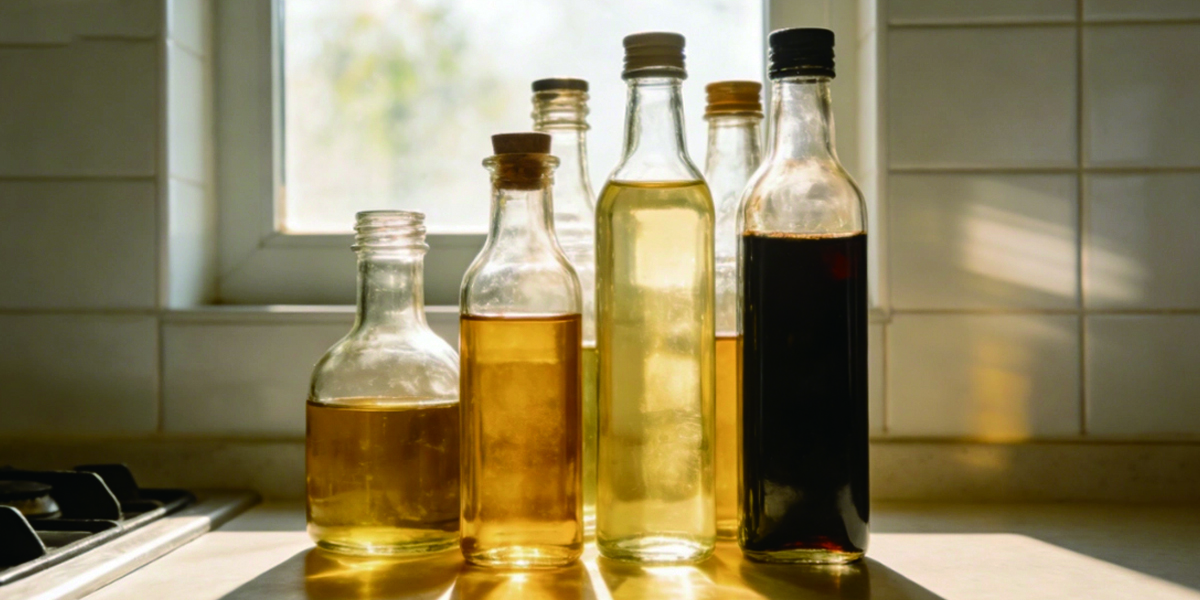
Before starting any project, selecting the right tools and materials will directly influence the outcome, because even a simple process like cutting a glass bottle requires precision and consistency to avoid breakage and waste.
At the most basic level, you only need a few essential tools, but each one plays an important role in ensuring a clean and controlled cut, including a high-quality glass cutter with a tungsten carbide wheel, masking tape to guide the cutting line, access to both hot and cold water for thermal shock, and sandpaper in medium and fine grits to smooth the edges after cutting.
If you want to achieve more professional results or plan to work on multiple bottles, additional tools such as a bottle cutting jig for stability, a diamond file for polishing, or a rotary tool for shaping and refining edges can greatly improve efficiency and consistency, especially in small-scale production environments.
It is important to understand that not all bottles behave the same during cutting, because thinner glass bottles typically respond better to thermal shock and produce cleaner breaks, while thicker wine bottles require more patience and repeated heating cycles, and clear glass often provides better visibility for scoring lines, which improves accuracy; when working with Mini Glass Bottles, extra care is required because their smaller diameter makes it harder to maintain a straight and even score line.
Tool Type | Purpose | Recommended Level |
Glass Cutter | Create score line | Essential |
Masking Tape | Guide cutting line | Essential |
Sandpaper | Smooth edges | Essential |
Bottle Jig | Improve stability | Optional |
Diamond File | Professional finish | Advanced |
Rotary Tool | Complex cutting | Advanced |
Safety should always be the first priority when working with glass, because even small mistakes can lead to injuries, especially when dealing with sharp edges and temperature changes.
Wearing proper protective equipment such as cut-resistant gloves, safety goggles, and a dust mask is essential because glass fragments can easily cause cuts or become airborne during sanding, and taking these precautions significantly reduces the risk of accidents.
The cutting process relies on thermal shock, which involves alternating between hot and cold temperatures to create stress along the score line, but applying excessive heat or rapid temperature changes can cause the bottle to shatter unpredictably, so it is important to control the flow and intensity of water carefully.
To minimize risk, always work in a controlled environment such as a sink or container that can contain broken pieces, and ensure that all fragments are cleaned up immediately after cutting to avoid accidental contact later.
This section outlines the most reliable method for cutting a glass bottle, combining scoring precision with controlled thermal shock to achieve consistent and clean results.
Start by thoroughly cleaning the bottle, which includes removing labels by soaking the bottle in warm water and using a solvent to eliminate any adhesive residue, because a clean surface ensures that the masking tape adheres properly and that the scoring line remains accurate throughout the process.
Wrap masking tape evenly around the bottle at the desired cutting height, making sure that the ends align perfectly to form a straight and continuous guide, since even a slight misalignment can result in an uneven break.
Using a glass cutter, apply steady and consistent pressure while rotating the bottle to create a single continuous score line, and avoid going over the same line multiple times because this weakens the glass and increases the likelihood of irregular cracking.
Pour hot water slowly along the score line while rotating the bottle evenly, then immediately apply cold water to create thermal stress, and repeat this alternating process until you hear subtle cracking sounds indicating that the glass is beginning to separate along the scored path.
Once the crack forms, gently pull the bottle apart without forcing it, because applying too much pressure can cause the break to deviate from the intended line.
After separation, use sandpaper starting with a medium grit to remove rough edges and then switch to a finer grit for a smooth finish, and for a more polished result, a diamond file can be used to refine the edge further.
Finally, wash the bottle thoroughly to remove any glass dust and carefully inspect the edges to ensure they are safe to handle or use.
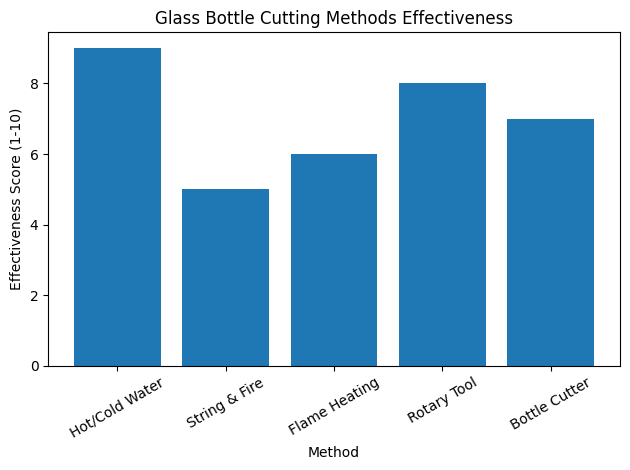
While the hot and cold water method is considered the most stable and beginner-friendly approach, there are several alternative techniques that can be used depending on your available tools, experience level, and the type of result you want to achieve. Each method has its own advantages and limitations, so understanding how they work will help you choose the most suitable option for your project.
This method involves wrapping a cotton string tightly around the glass bottle at the desired cutting point, soaking it in alcohol or acetone, and then igniting it before quickly submerging the bottle in cold water. The rapid temperature change creates thermal stress that causes the glass to crack along the heated line. While this technique is popular because it requires minimal tools, it can be difficult to control the heat distribution evenly, which often leads to jagged or uneven cuts. It is best suited for simple DIY projects rather than precision work.
In this approach, a candle or small torch is used to heat the scored line on the glass bottle while slowly rotating it to distribute heat evenly around the surface. After sufficient heating, the bottle is cooled with water to trigger the break. Compared to the string method, this technique allows slightly better control over the heating process, but it still requires patience and steady movement to avoid overheating one area, which could result in cracks forming away from the intended line.
A rotary tool fitted with a diamond cutting disc or glass-specific blade is ideal for advanced users who need more flexibility and precision, especially when working on custom designs or cutting shapes into the side of a glass bottle. This method does not rely on thermal shock but instead uses mechanical cutting, which produces cleaner and more controlled results. However, it requires proper handling, continuous cooling with water to prevent overheating, and some experience to avoid damaging the glass or the tool.
Bottle cutter devices are specifically designed to simplify the process by holding the glass bottle in place and guiding the cutting tool along a fixed path. These devices are particularly useful for beginners because they help maintain a straight and consistent score line, which is the most critical step in achieving a clean break. They are also highly effective for repeated cutting tasks, making them a practical choice for small businesses or hobbyists working with multiple bottles, including Mini Glass Bottles, where precision and consistency are even more important.
Understanding common mistakes can help you avoid frustration and improve your results more quickly.
Issue | Cause | Solution |
Uneven cut | Poor scoring | Maintain steady pressure |
Random cracks | Multiple lines | Score once only |
No separation | Thick glass | Repeat heating cycles |
Sharp edges | Poor sanding | Use finer grit |
These problems are typical for beginners, but they can be minimized with practice and proper technique.
Achieving a professional finish requires attention to detail and consistency throughout the process, so maintaining a continuous score line is crucial because it guides the break accurately, while practicing on spare bottles helps build confidence before working on valuable pieces, and using finer abrasives ensures a smooth and polished edge that enhances both safety and appearance, and keeping tools wet during sanding reduces friction and prevents overheating, which can damage the glass.
Once you have successfully cut a glass bottle, there are many creative ways to reuse it, such as transforming it into drinking glasses, decorative vases, or candle holders, which are popular in both home decor and commercial settings, while more advanced projects include turning bottles into lamps or lanterns that add ambiance to any space, and for small-scale packaging needs, Mini Glass Bottles are particularly useful for storing essential oils, spices, or samples, making them ideal for gift sets or boutique product lines.
Cutting a glass bottle needs skill and patience. Follow scoring, heat, and smoothing steps. This ensures clean and safe results.Xuzhou Glamour Exp.& Imp. Co., Ltd. offers quality glass products. They provide custom design and OEM services. Their solutions improve efficiency and product value.
A: Score the glass bottle once, then use hot and cold water.
A: Poor scoring or heat control can damage a glass bottle.
A: Yes, but Mini Glass Bottles need precise control.
A: A glass bottle cutter and sandpaper give best results.
A: Sand the glass bottle using medium to fine grit.