
Views: 0 Author: Site Editor Publish Time: 2026-03-20 Origin: Site


Ever tried drilling a glass bottle cleanly? Many beginners fail at first.A glass bottle can become useful items. But drilling it needs proper technique.In this article, you will learn simple methods. We show safe steps and practical tips.
Before starting, it is important to prepare the glass bottle properly by removing all labels, adhesives, and dirt, because any residue can affect accuracy and cause the drill bit to slip during operation, which may lead to cracks or uneven holes. Cleaning can be done using warm water, mild detergent, or a solvent, and once the surface is completely clean and dry, the bottle should be inspected for thickness and shape to determine the appropriate drilling speed and pressure.
Selecting the correct drill bit is critical for success, as diamond-coated drill bits provide the highest precision and durability by grinding the glass gradually, while carbide-tipped bits offer a more affordable option for general use, though they may wear faster under continuous use. Using improper drill bits, such as standard metal bits, can increase stress on the glass bottle and result in cracks or rough edges, which is why investing in the right tools significantly improves results.
Accurate marking ensures precise hole placement, and this is typically done by applying masking tape to the drilling area to create friction and prevent slipping, followed by marking the exact drilling point using a pen or marker, ensuring that the position is centered and aligned with the intended design, especially when symmetry is required in decorative or functional applications.
Stability plays a key role in preventing damage during drilling, so the glass bottle should be placed on a soft surface such as a towel or rubber pad to absorb vibration, and if possible, clamps or holding fixtures should be used to keep the bottle firmly in place, as even slight movement can cause the drill bit to deviate and produce uneven or chipped holes.
The correct drilling technique involves starting at a low speed and positioning the drill at a slight angle to create an initial groove, which helps the bit grip the surface before gradually moving to a vertical position, while maintaining light and steady pressure throughout the process, because forcing the drill can increase friction and cause the glass to crack unexpectedly.
Heat control is one of the most important factors when drilling a glass bottle, as friction generates heat quickly, which can lead to thermal stress and breakage, so continuous cooling using water, either through a spray bottle or a steady stream, is necessary to keep both the glass and the drill bit at a safe temperature, ensuring a smooth and controlled drilling process.
After the hole is drilled, the edges are often sharp and uneven, so sanding with medium to fine grit sandpaper is required to smooth the surface, followed by thorough cleaning to remove glass dust, ensuring that the final product is safe to handle and suitable for its intended use.
Having the right tools and materials ensures consistent results and improves efficiency, especially for repeated tasks or small-scale production.
A variable-speed power drill is essential for controlling speed, while diamond or carbide drill bits are necessary for cutting through glass safely, and masking tape along with a marker helps guide the drilling process accurately.
Supporting tools such as spray bottles for water cooling, clamps for stability, and soft padding materials for vibration reduction help improve control and precision during drilling operations.
Safety equipment including gloves, goggles, and a stable workspace is crucial to protect against glass fragments and dust, ensuring a safe working environment.
Tool | Function | Importance |
Power Drill | Controls drilling speed | High |
Diamond Bit | Precision cutting | High |
Masking Tape | Prevents slipping | Medium |
Water Spray | Cooling system | High |
Clamp | Stability support | Medium |
Proper setup reduces production errors.
While drills provide the best results, alternative methods can be used when tools are limited, although they often sacrifice precision and consistency.
A soldering iron can be used to heat the glass surface and trace the desired hole shape, gradually weakening the material until it can be removed, which is useful for simple designs but requires patience and control.
This method works best for decorative applications such as terrariums or artistic designs where perfect precision is not required, making it suitable for hobbyists rather than professional use.
Compared to drilling, non-drill methods often produce rough edges, require more time, and carry a higher risk of uneven results, which limits their use in high-quality or commercial applications.
Selecting the right drill bit depends on project requirements, budget, and desired finish quality.
Diamond drill bits offer superior precision and durability, making them ideal for delicate or high-value glass bottle projects where clean edges and minimal damage are required.
Carbide bits provide a balance between cost and performance, making them suitable for general DIY projects and occasional use.
Bit Type | Precision | Cost | Durability |
Diamond | High | High | High |
Carbide | Medium | Medium | Medium |
Standard | Low | Low | Low |
Understanding common problems helps improve efficiency and reduce material loss.
Problem | Cause | Solution |
Cracking | High speed or heat | Use low speed and water |
Slipping | Smooth surface | Use tape guide |
Overheating | Dry drilling | Apply cooling water |
Chipped edges | Excess pressure | Use light force |
These issues are common for beginners, but they can be minimized by following correct techniques and maintaining control throughout the process.
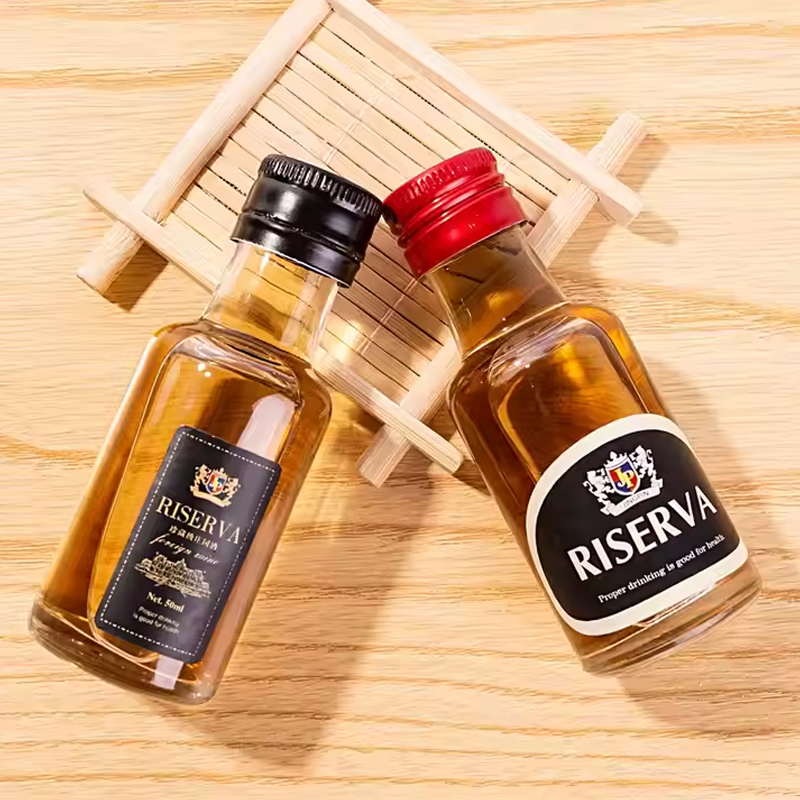
Working with Mini Glass Bottles requires greater precision because their smaller size makes them more fragile, and using stable positioning along with gentle pressure helps prevent sudden breakage during drilling.
Lower drilling speed is essential when working with thin materials, as high speed increases heat and stress, which can easily damage small bottles.
Mini Glass Bottles are widely used in decorative and commercial applications, such as small packaging, gift sets, or branding solutions, and for example, a 30ml mini liquor glass bottle made of lead-free glass offers excellent sealing performance and portability, making it suitable for beverages, oils, or samples, while drilled holes can enhance functionality by enabling hanging, lighting integration, or customized display designs.
Once drilling is complete, the glass bottle can be repurposed in many creative and commercial ways.
Drilled holes allow for inserting LED string lights or small bulbs, transforming a glass bottle into a unique lighting piece that creates a warm and ambient atmosphere, making it ideal for home décor, restaurants, cafés, and event settings such as weddings or parties, while different bottle shapes and colors can be combined to create customized lighting designs that stand out.
By using drilled holes to attach ropes, wires, or hooks, a glass bottle can be converted into hanging decorations, wind chimes, or wall art, which are widely used in indoor and outdoor spaces to enhance visual appeal, and when combined with beads, metal pieces, or wooden elements, these designs can create pleasant sounds and artistic effects that increase their decorative value.
Drilled holes improve airflow and drainage, which are essential for plant health, allowing the glass bottle to function as a small planter or terrarium, making it suitable for growing succulents, herbs, or decorative plants, while transparent bottles provide a clear view of soil layers and plant roots, adding a natural and modern touch to home or office environments, and these designs are also popular for eco-friendly packaging or gift sets in niche markets.
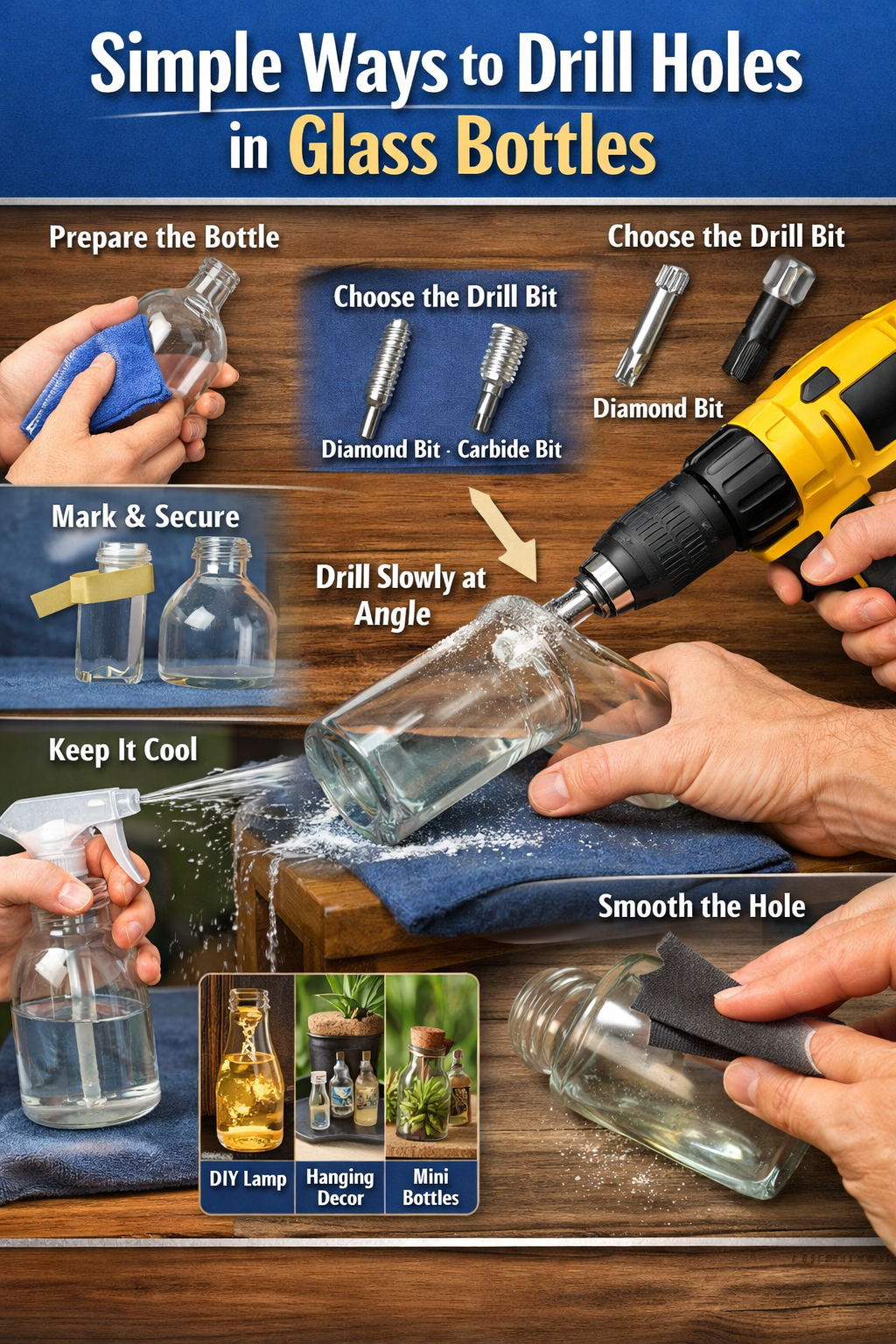
Drilling a glass bottle requires patience, proper tools, and controlled techniques, and by maintaining low speed, steady pressure, and continuous cooling, it is possible to achieve clean and precise holes consistently, even for beginners who are just starting out.
With practice, this skill becomes highly valuable for both DIY enthusiasts and businesses, as it enables customization, improves product functionality, and opens up new opportunities in design, packaging, and creative reuse, especially when working with Mini Glass Bottles, which offer compact, versatile solutions for modern applications, and companies such as Xuzhou Glamour Exp.& Imp. Co., Ltd. provide high-quality glass bottles along with OEM and customization services that further support efficient production and creative product development.
A: Drill a glass bottle at low speed and cool it.
A: A glass bottle cracks from heat or high pressure.
A: Yes, Mini Glass Bottles need low speed and care.
A: A diamond bit works best for a glass bottle.
A: Sand the glass bottle edges gently after drilling.