
Views: 0 Author: Site Editor Publish Time: 2026-09-30 Origin: Site


Pharmaceutical procurement carries exceptionally high stakes where every single decision holds significant weight. Selecting the proper liquid medicine packaging directly impacts long-term drug stability, overall patient safety, and strict regulatory compliance. You must move far beyond basic unit prices when evaluating these essential containers. True packaging validation requires a meticulous dive into hydrolytic resistance, absolute closure compatibility, and unwavering manufacturer reliability. Poor packaging choices routinely risk costly product recalls and heavily compromised patient treatments. This guide provides a practical, technical, and operational framework to help you confidently navigate these complex choices. We will show you exactly how to evaluate, test, and carefully shortlist the most reliable glass syrup bottles for your specific pharmaceutical manufacturing lines.
Glass provides ultimate chemical inertness for liquid formulations. It consistently outperforms plastics like PET in pharmaceutical environments. Plastics sometimes allow harmful chemical leaching. Active pharmaceutical ingredients (APIs) can negatively interact with plastic polymers over time. Glass entirely prevents this interaction. It ensures the medicine remains pure from the day you bottle it until the patient consumes it.
Beyond chemical inertness, glass delivers superior barrier properties. It creates an impenetrable shield against oxygen and moisture ingress. Cough syrups, liquid antibiotics, and oral suspensions degrade quickly when exposed to air. Oxygen alters their chemical structure. Moisture dilutes their efficacy. Glass blocks both elements completely. This naturally extends the shelf life of highly sensitive liquid medications.
Cross-industry safety standards heavily influence glass manufacturing. You see very strict regulations applied to both pharmaceutical bottles and chemical bottles. These overlapping rules drive a high baseline for overall glass production. Manufacturers must meet these rigid safety profiles universally. This guarantees consistent material density, pure raw ingredients, and dependable performance across different pharmaceutical applications.
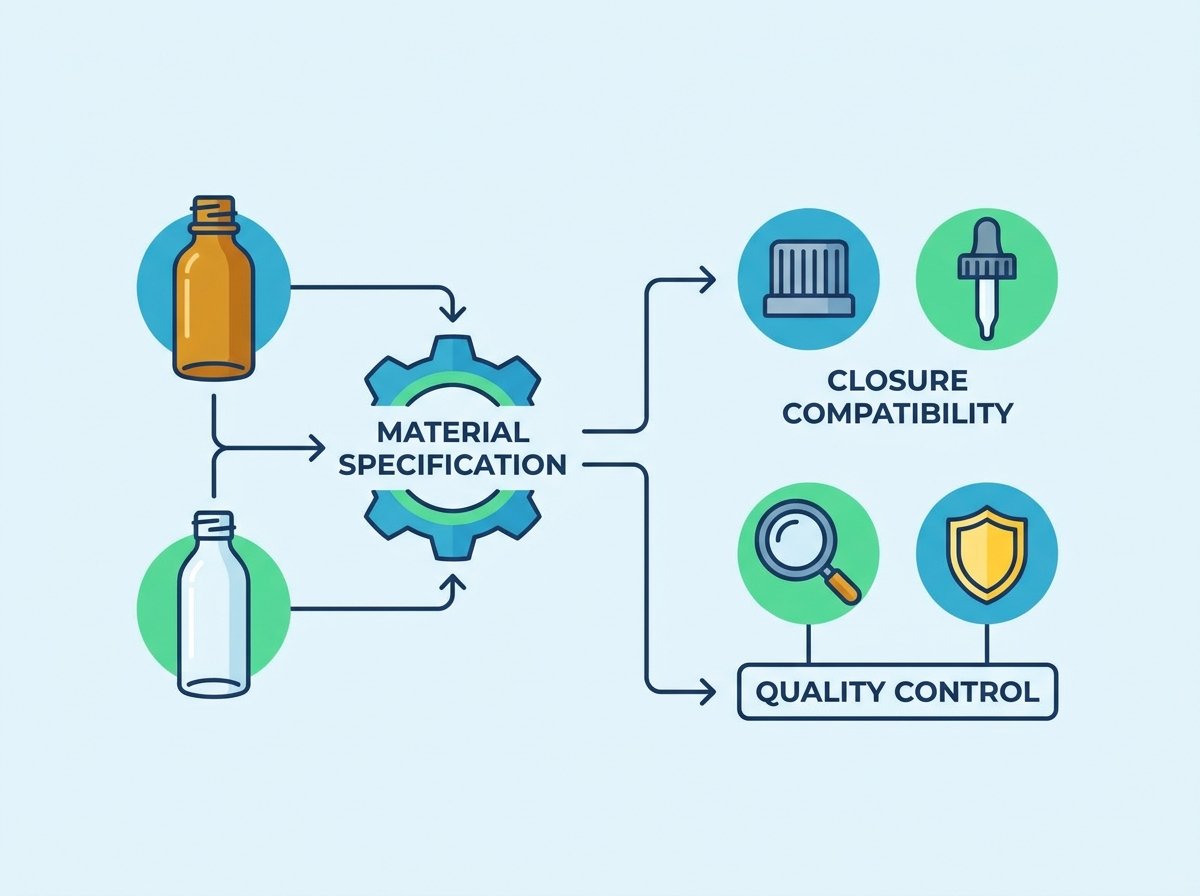
Type III soda-lime glass serves as the trusted industry standard. It works perfectly for most non-parenteral liquid oral preparations. Common syrups, elixirs, and basic suspensions rely on it heavily. It offers moderate hydrolytic resistance. This resistance perfectly matches the chemical demands of standard liquid formulations.
Type II treated soda-lime glass serves a more specialized role. Manufacturers apply a specific sulfur dioxide surface treatment during production. This treatment drastically increases the inner surface hydrolytic resistance. You need Type II glass for highly sensitive acidic or neutral aqueous formulations. It prevents alkali release from the glass surface into the liquid medicine.
Amber glass remains the mandatory choice for light-sensitive APIs. UV and blue light quickly degrade many liquid medications. Amber glass actively blocks these harmful wavelengths. It prevents photochemical degradation completely. When sourcing these bottles, you must verify they meet USP/EP light transmission limits for maximum UV protection.
Flint clear glass provides the best option for highly stable liquids. You choose flint glass when formulation visibility matters most. It helps patients accurately measure their dosages. It also aids your quality control team during visual particulate inspection. You should only use flint glass assuming no photosensitivity risks exist in your formula.
Table: Glass Type and Color Comparison for Liquid Packaging
| Glass Specification | Primary Application | Key Technical Advantage |
|---|---|---|
| Type III Soda-Lime | Standard oral syrups and elixirs | Excellent baseline stability for non-parenteral liquids |
| Type II Treated | Acidic or neutral aqueous liquids | High hydrolytic resistance via surface treatment |
| Amber Color | Light-sensitive APIs | Blocks UV and blue light to prevent degradation |
| Flint (Clear) Color | Visually inspected formulations | Maximum clarity for precise dosage measurement |
Standardized threading guarantees seamless integration on your packaging line. You must specify industry-standard neck finishes like DIN 28 or PP 28. High-speed capping machinery requires these exact dimensions to operate smoothly. Minor dimensional deviations cause frequent machinery jams. Standard threads also ensure the caps tighten evenly. This uniform tightening prevents devastating leaks during shipping and storage.
Safety and compliance constraints dictate your closure choices. Your selected bottle must easily accommodate modern safety caps. You evaluate this through two primary components:
Dosing integration requires strict dimensional tolerances. You must measure the neck internal diameter carefully. Liquid medicines often require extra dosing tools. The internal diameter must flawlessly accommodate oral syringes. Dropper inserts must sit securely without falling into the bottle. Pouring adapters must fit tightly without dislodging during consumer use. Exacting measurements prevent patient frustration and accidental overdosing.
Defect tolerances directly impact patient safety and production uptime. You must discuss Acceptable Quality Levels (AQLs) with your supplier immediately. AQLs categorize physical flaws logically. Critical defects include deep cracks or loose glass particulates. These render the bottle entirely unusable. Minor defects include tiny cosmetic scratches. You must ensure the manufacturer maintains a near-zero tolerance for critical defects.
Automated inspection systems catch flaws human eyes miss. Top-tier suppliers utilize 100% automated camera inspection protocols. Multiple vision systems scan every single bottle on the line. They quickly detect wall thickness inconsistencies. They identify hidden internal stresses. They reject deformed neck finishes instantly. This technology guarantees you only receive structurally sound packaging.
Proper annealing prevents sudden breakage. Glass expands and contracts based on temperature. Poor annealing leaves extreme internal stress within the glass walls. This stress causes sudden breakages during high-speed filling. Thermal shock easily destroys weak glass during hot washing cycles. Rigorous glass container quality control ensures precise annealing temperatures. This directly reduces your factory downtime.
Regulatory certifications serve as non-negotiable facility requirements. You must verify these credentials before placing an order:
Filling line integration starts the moment pallets arrive at your facility. You must consider how the manufacturer delivers the bottles. Some suppliers deliver them sterile-ready in sealed tubs. Others provide them shrink-wrapped on bulk trays for standard washing. Your specific depyrogenation and washing workflows dictate this choice. Mismatched delivery formats disrupt operations and slow down medicine production significantly.
Scalability ensures long-term manufacturing stability. You must balance two very different production needs. First, you need reasonable minimum order quantities (MOQs) for initial pilot runs. Second, you need a supplier capable of handling full commercial scale-up later. They must transition from supplying ten thousand units to five million units seamlessly. Their production speed and defect rates must remain absolutely stable during this massive growth.
Sourcing next steps require careful technical validation. You should never rush straight into commercial procurement. We recommend requesting full specification sheets first. Ask for detailed technical drawings of the neck finishes. Finally, secure an entire validation sample batch. You run these specific samples through your line trials. This mechanical testing confirms compatibility before you make long-term commitments.
Selecting the right packaging requires a highly structured evaluation framework. You must formulate your initial requirements based on specific drug sensitivities. You then carefully verify closure compatibility to prevent leaks and ensure patient safety. Finally, you rigorously audit the supplier's internal inspection processes to guarantee consistent delivery.
Take action by contacting your shortlisted manufacturers today. Request their technical drawings and their FDA Drug Master File. Secure a sizable sample batch immediately. Bring those samples onto your factory floor. Begin your mechanical testing and line trials. Hands-on validation always remains the safest way to finalize your liquid medicine packaging decisions.
A: Type III is standard, untreated soda-lime glass. It works perfectly for most standard oral liquids and syrups. Type II glass utilizes the exact same base but undergoes a special surface treatment. This treatment provides significantly higher hydrolytic resistance, making Type II ideal for sensitive acidic or neutral aqueous formulations.
A: Amber glass physically blocks harmful UV and blue light wavelengths. Many active pharmaceutical ingredients in cough medicines degrade quickly when exposed to light. Amber packaging prevents this photochemical degradation. It effectively protects the chemical integrity and extends the overall shelf life of the liquid medication.
A: DIN 28 represents a standardized European thread size specifically designed for pharmaceutical syrups. It dictates the exact external dimensions of the bottle neck. This standardized sizing ensures perfect compatibility with universal tamper-evident rings, child-resistant closures, and precise dosing caps used across the medical industry.
A: You should request their official ISO 15378 certificate immediately. Ask them to provide their Acceptable Quality Level (AQL) sampling plans. Finally, request a detailed summary of their automated inline inspection processes. Top suppliers will easily provide documentation proving they use advanced camera systems to detect critical flaws.